
From Start-up to Enterprise: One Platform, Infinite Insights with Microsoft Fabric
A local boutique and a multinational insurer have the same problem at different sizes: data scattered across tools, and decisions made on gut feeling because pulling the numbers together takes too long. Microsoft Fabric, the unified analytics platform introduced by Microsoft, was built for exactly that problem. By bringing data engineering, business intelligence, and AI into a single platform, it lets companies of any size become truly data driven.
What is Microsoft Fabric?
Microsoft Fabric is a cloud-based, end-to-end data platform that combines services like Power BI, Azure Synapse, Data Factory, and Azure Data Lake into a single experience. Data integration, management, and analysis all happen through one portal. With a lake-centric architecture and support for open data formats like Delta Lake and Apache Parquet, Fabric removes data silos and improves collaboration between teams.
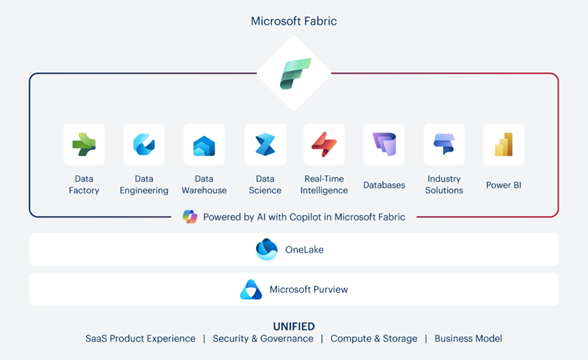 Source:
 Why It Matters for Small Businesses
Small businesses usually run on limited resources and fragmented data sources. Fabric levels the playing field: the analytics tools are unified and easy to adopt and scale, pricing is pay-as-you-go so there is no heavy upfront investment, and the integration with familiar tools like Excel and Power BI keeps the learning curve short. Raw data becomes usable insight quickly, guiding everything from marketing campaigns to inventory management.
Small business example: a retail boutique with online sales
A local clothing boutique with both a physical store and an online shop wants to better understand customer buying behavior. Using Power BI within Fabric, the owner connects data from their Shopify store, POS system, and Google Ads into OneLake. With minimal setup, they create reports showing which products are top-sellers per channel, what times of year see peak sales, and how marketing campaigns influence online purchases. Smarter inventory and marketing decisions, without needing a data team.
Scaling With Mid-Sized Organizations
For mid-sized businesses, growth introduces complexity. Data becomes more abundant but harder to control. Fabric scales along: Data Factory automates data pipelines and reduces manual ETL work, Microsoft Purview integration centralizes governance for data quality and compliance, and collaborative workspaces let analysts, engineers, and decision-makers build insights together in real time.
Fabric also supports advanced analytics, such as predictive modeling, without requiring a dedicated data science team. That helps mid-sized companies make proactive decisions, not just reactive ones.
Mid-sized business example: a manufacturing company
A mid-sized manufacturing firm operates across three countries and wants to optimize its supply chain to reduce delays and costs. Using Data Factory in Fabric, they ingest data from ERP systems, logistics partners, and machine sensors into a unified data lake. A business analyst uses Power BI to create real-time reports tracking supplier delivery performance, inventory turnover rates, and machine downtime trends. By spotting inefficiencies and forecasting shortages, the company makes better procurement and production decisions.
Enterprise-Grade Power for Large Organizations
Enterprises deal with massive data volumes across departments, regions and platforms. Fabric handles that scale with OneLake, a single logical data lake for the entire organization, real-time analytics powered by Synapse Real-Time Analytics and Event Streams, and security and compliance that meet global standards. That last part matters most in regulated industries.
Large companies also benefit from Fabric's open and expandable foundation: existing data platforms and AI models connect without friction. Strategic decisions, from product development to customer engagement, can be data-driven at every level.
Large enterprise example: a global insurance provider
A multinational insurance company wants to detect fraud more effectively and improve customer service through predictive analytics. Fabric's Real-Time Analytics and Data Science workloads process millions of claims across regions. Using integrated AI models, the company flags suspicious claims in real time, identifies customers likely to churn, and suggests tailored policy upgrades for each client. All departments, from fraud teams to marketing, access shared, governed data through Microsoft Purview, keeping compliance and collaboration intact at scale.
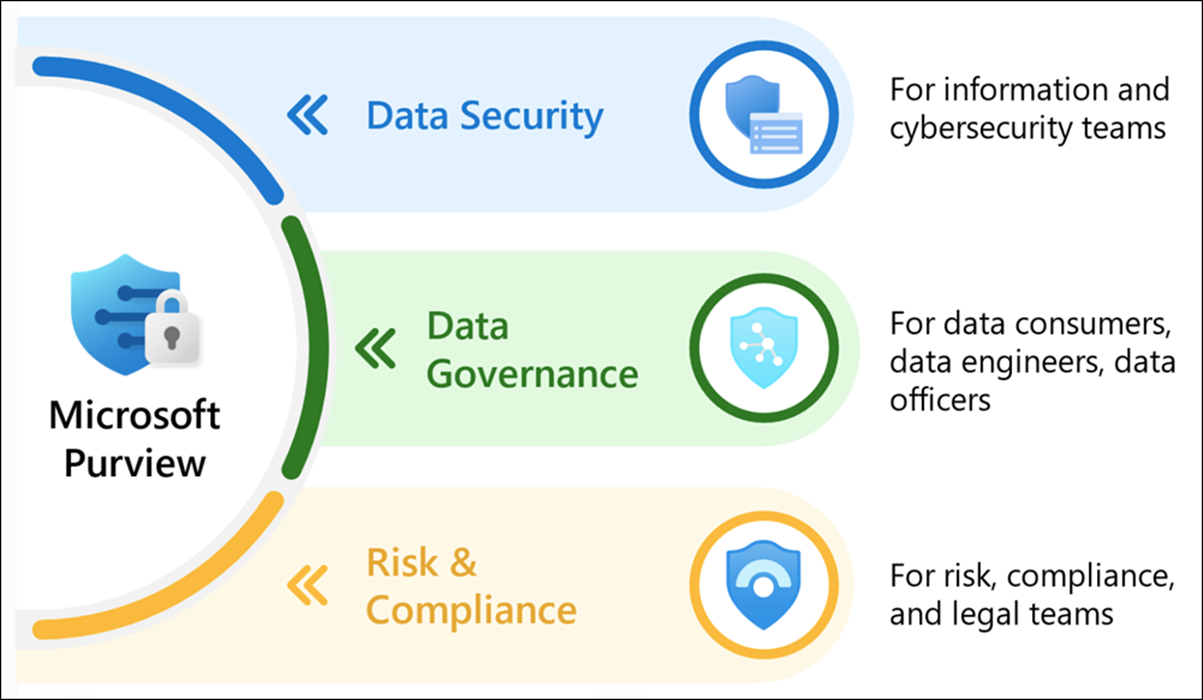 Source: https://learn.microsoft.com/en-us/purview/data-gov-classic-security-best-practices
Conclusion
The boutique, the manufacturer, and the insurer use the same platform. They just use different parts of it. That is the point of Fabric: fewer silos, more automated workflows, and decisions based on numbers instead of gut feeling, whatever your company size.
Do you recognize any of the struggles in this post? Not sure which approach to take? Sign up and let us guide you through the world of Fabric.
Want to implement this in your workflow, too?

Dennis Guldemont
Dennis has been working in data and analytics for over half a decade, most of it centered on Power BI. He studied Management and IT at Ghent University and specializes in translating analytics requirements from business stakeholders into reports that actually get used. When he's not building dashboards, he's playing guitar through a Marshall amp at a volume his neighbors tolerate.