

From dashboards you read to a system you talk to.
Plainsight makes data platforms ready for Generative BI: you will increasingly ask questions in plain language instead of reading a dashboard, but whether the answer is right depends on the semantic model underneath, not on the agent on top.
From dashboards to dialogue
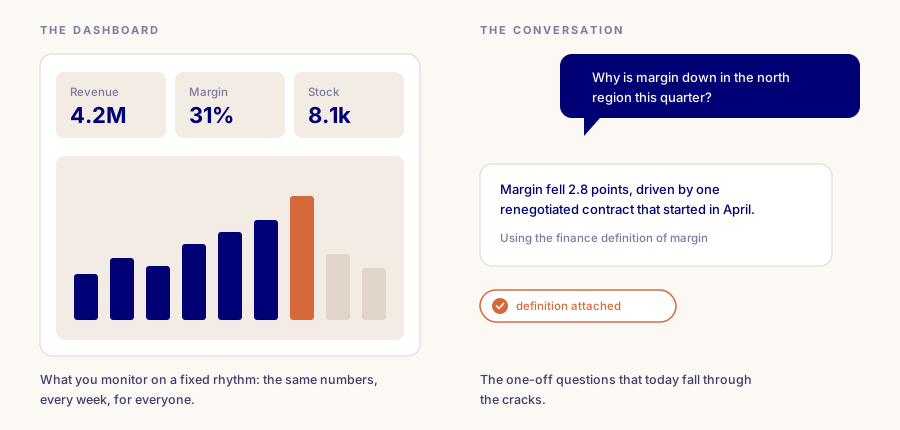
For twenty years the dashboard was the destination. It worked, but it was slow, it aged, and it answered only the questions somebody thought to ask in advance.
The dashboard is not going away. It keeps what you monitor on a fixed rhythm. What the conversation adds is the long tail: the one-off questions that never justified a report and today land on the data team as a ticket, or go unasked.
BEFORE WE START
Sound familiar?
The problems people bring us before anyone asks a question of their data. Each one has a way out, and the rest of this page is how we get there.
How we approach it
One number disagreed with the board report, nobody could explain why, and people quietly stopped asking.
How we approach it
That answer is not in any single table. It is in how each report defines its dates, or which customers one of them counts.
How we approach it
An agent inherits that ambiguity and answers confidently anyway, with somebody's definition, just not necessarily yours.
How we approach it
A table changed, a metric was refined, the context did not follow. The answers do not break. They turn subtly wrong.
How we approach it
That instinct is right. Better to know which gaps are there before you promise the business a chatbot.
Why data is harder than software
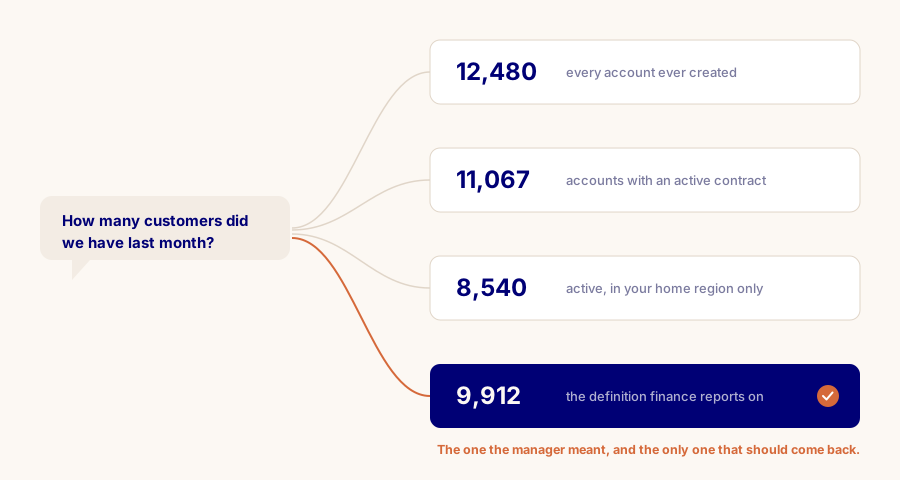
For software, several paths lead to a correct solution, and tests catch a wrong result quickly. Data works differently. Ask how many customers you had last month, and the answer shifts with the filters and the viewpoint you take. A wrong answer looks just as convincing as a right one. So the challenge is not running the query. It is whether the agent can link a plain-language question to the right, up-to-date place in your model.
questions answered correctly when a frontier AI model is pointed at a raw enterprise data warehouse, with no described model to lean on.
Spider 2.0 benchmark, ICLR 2025. A point-in-time figure: models improve, the gap to grounded set-ups remains.

What changes, in three parts
For end users
BI stops being a dashboard you read and becomes a system you talk to.
For data teams
The toil of pipelines and tickets gives way to agents that draft, test and heal.
Building blocks
What makes any of it trustworthy, including the governance that lets an agent say it does not know.
The semantic model, and the meaning above it
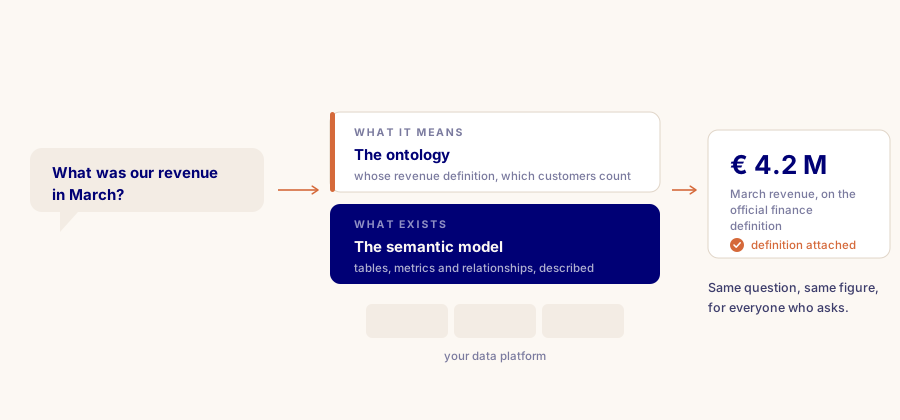
The semantic model says what exists. The ontology says what it means.
It starts with a strong semantic model: the layer where you describe your tables, metrics and relationships, so the agent knows what each one is for. When a question maps onto a defined metric, everyone in the company gets the same figure.
What that does not capture is meaning. Why revenue is calculated a certain way, which customers count, what a term means to one team versus another. That lives in an ontology: a structured map of what your business means and how its parts connect.
Two things keep it trustworthy. It has to stay current, because the moment a definition changes and the context does not follow, answers turn subtly wrong. And every definition that matters needs a human owner. AI drafts this layer. It does not get to decide what is true.
You do not have to build it all from scratch. Microsoft and Databricks are building ontology and context capabilities into their platforms.
of questions answered correctly when the same AI is grounded in a well-described semantic layer, up from the mid-eighties without one.
dbt Labs semantic-layer benchmark, 2026: 98 to 100% with a governed semantic layer, against 84 to 90% without one.
Why this fails at most companies
The technology is rarely what breaks. The same five patterns keep coming back, and every one is cheaper to avoid than to repair.
of enterprise GenAI pilots show no measurable impact on the bottom line. The gap is rarely the model. It is the foundation underneath it.
MIT Project NANDA, The GenAI Divide: State of AI in Business, 2025.
The demo comes first. The foundation never follows.
A chat interface on the warehouse convinces in week one. Then finance asks why the agent's revenue differs from the board report, and nobody can explain it. It does not fail loudly. It just never gets trusted with a real decision.
The context goes stale.
Definitions get written down once. Then a table changes and the context does not follow. Anthropic reported their own accuracy drifting from around 95% to roughly 65% in a single month. Nobody had planned for maintenance.
The same word means three things.
Sales counts customers one way, finance another, operations a third. The agent inherits that ambiguity and answers confidently anyway, with somebody's definition, just not necessarily yours.
Nobody owns the definitions.
AI can draft what your terms mean. What it cannot do is decide what is official, so three versions of margin live on side by side. Someone has to make the call, and it has to be their job.
The agent is asked what your analysts cannot answer.
If your own analysts could not answer a question today, an agent will not either. What it really does is force the conversation most companies keep putting off.
How we work
Four steps, built to avoid all five of those patterns: robust semantic models, human-curated definitions and the data quality underneath them, built with your people rather than around them.
Which decisions weigh heaviest, which numbers get challenged in meetings, where dashboards disagree today. That tells us which domain to make AI-ready first.
An organisation project, not an IT project
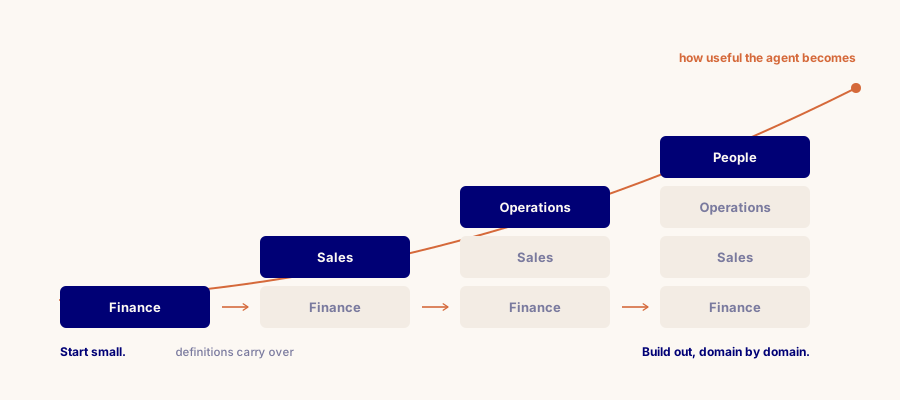
Business terms grow inside a company over the years, often meaning different things to different teams. Setting up chat with your data brings all of that to the surface. That is a feature, not a nuisance: the alignment you do for the agent is alignment your people needed anyway. You do not have to get it perfect at once. Start where the questions come most often and the decisions weigh heaviest, then build out.
An organisation that agrees on what its numbers mean makes better decisions, with or without AI.
Frequently asked questions
Will dashboards disappear?
No. The dashboard keeps what you monitor on a fixed rhythm. What changes is that the one-off questions, the ones that never justified building a report, get picked up by a conversation instead of landing on the data team as a ticket.
Can we not just connect a data agent to our data warehouse?
You can, and it demos well. Pointed at a raw enterprise warehouse with no described model to lean on, a frontier AI model answered about one question in five correctly in the Spider 2.0 benchmark. The difference is not the agent. It is how well the platform underneath was prepared for it.
What is the difference between a semantic model and an ontology?
The semantic model says what exists: which tables and metrics there are and how they connect. The ontology says what they mean: whose definition of revenue applies, which customers count. An agent needs both. The first tells it where to look, the second tells it how to read what it finds.
How long before we can ask questions of our data?
Sooner than a platform rebuild, later than a demo suggests. We start with one domain, usually where the questions come most often and the decisions weigh heaviest. Each domain you get right makes the next one faster, because the definitions carry over.
Do we need Microsoft Fabric or Databricks for this?
You need a platform with a semantic layer you can describe and govern, and both qualify. Microsoft and Databricks are building ontology and context capabilities into their products, so part of this layer is something you can lean on your platform for. Plainsight is a partner of both and works on Fabric, Databricks, or a mix.
What if our data quality is not good enough yet?
Then that is the work, and better known now than after you promised the business a chatbot. A useful test: if your own analysts could not answer a question today, because the data is missing or nobody trusts it, an agent will not be able to either.
Everything connects.
Strategy gives direction. Building creates value. Specialists protect it.
Strategy
From business questions to a data, AI and software direction your organisation can follow.
Explore →Build
Data and analytics, AI, and custom software. Built with adoption and ownership from day one.
Explore →Experts
Specialists who think like teammates. Keep your engine running and your team growing.
Explore →Where is your BI heading?
If dashboards to dialogue is the direction you want to take, we should compare notes. No pitch, just a conversation about where your BI is going.
Talk to an expert