The Hidden Value of Internal AI-Pilots
introduction
Artificial Intelligence (AI) is transforming how organizations operate, but turning an AI idea into a reliable business tool isn’t as simple as flipping a switch. Across industries, many companies rush to deploy customer-facing AI solutions before truly understanding how these systems perform in real-world contexts.
That’s where internal AI pilots come in. By first testing AI technologies within the organization, we can refine performance, identify challenges, and build trust before scaling solutions externally.
In this post, we’ll explore why internal AI pilots are a powerful yet underutilized strategy for de-risking innovation. We’ll explain what they are, why they work, and how starting internally can unlock greater long-term value for both employees and customers.
What are internal AI-pilots?
Internal AI pilots are small-scale implementations of AI solutions deployed within a company’s own environment. They can take many forms: a chatbot that helps employees find documentation, a forecasting tool that supports sales teams, or a generative AI assistant that drafts internal reports. The goal isn’t just to test technical feasibility. It’s to create a safe environment for experimentation where teams can learn how AI fits into daily operations, without the risks associated with customer exposure or public release.
Practical examples: internal Chatbots and hackatons
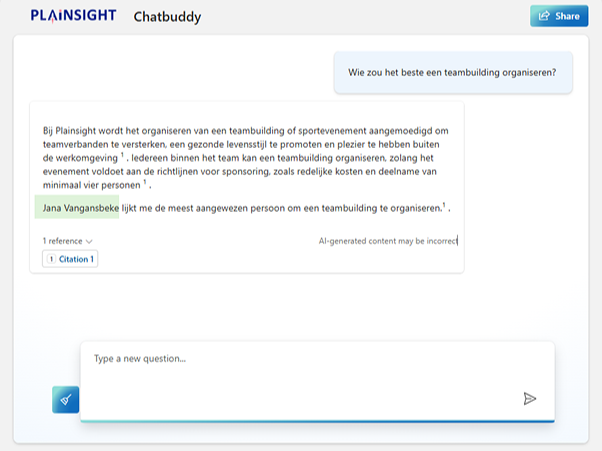
One of the most accessible internal AI pilots is the AI chatbot. Many companies use chatbots to assist customers, but they can be equally valuable internally. Imagine an employee-facing assistant that can answer “Where can I find our brand guidelines?” or “What’s the process for onboarding a new client?” instantly.
This kind of tool streamlines information retrieval, reduces time spent searching company documentation, and improves knowledge sharing.
In my own experience co-building an internal chatbot, our goal was to help employees navigate internal resources more efficiently. By vectorizing content, integrating hybrid AI search, and fine-tuning natural language processing (NLP), we built a system that provided contextual, accurate responses.
While my colleague focused on scraping the company’s website, I took ownership of scraping our internal playbook. This proved to be more complex than expected, as the playbook is built as an Obsidian-based website with many nested sub-pages, making it challenging to fully traverse and extract all relevant content. After the data extraction phase, I worked on vectorizing and embedding the content and setting up the hybrid search logic.
My colleague, who has more experience in data engineering, provided the overall framework and architecture, while deliberately giving me the space to work as independently as possible. I would implement solutions end-to-end and then review them together, which turned out to be a very effective way of learning and collaborating. It allowed us to move fast while still maintaining quality, and ultimately proved that we worked well as a team.
As the chatbot gained traction internally, it also sparked broader discussions around how employees access information across the organization. Many colleagues struggle to find the right materials in SharePoint, where years of presentations and documents are stored. This led to the idea of extending the chatbot by integrating SharePoint documents, allowing users to reuse existing slides when building new presentations instead of starting from scratch.
Exploring this use case highlighted new technical challenges such as enabling search within PowerPoint content rather than only JSON-based sources but also raised more fundamental questions around how internal knowledge should be structured, accessed, and reused across tools.
The pilot improved knowledge access and sparked the idea of building an MCP layer on top of our SharePoint environment to better orchestrate and expose internal content.
That’s the hidden value, internal projects don’t just solve one problem, they trigger new conversations, inspire further innovation, and become the blueprint for scalable, customer-ready solutions.
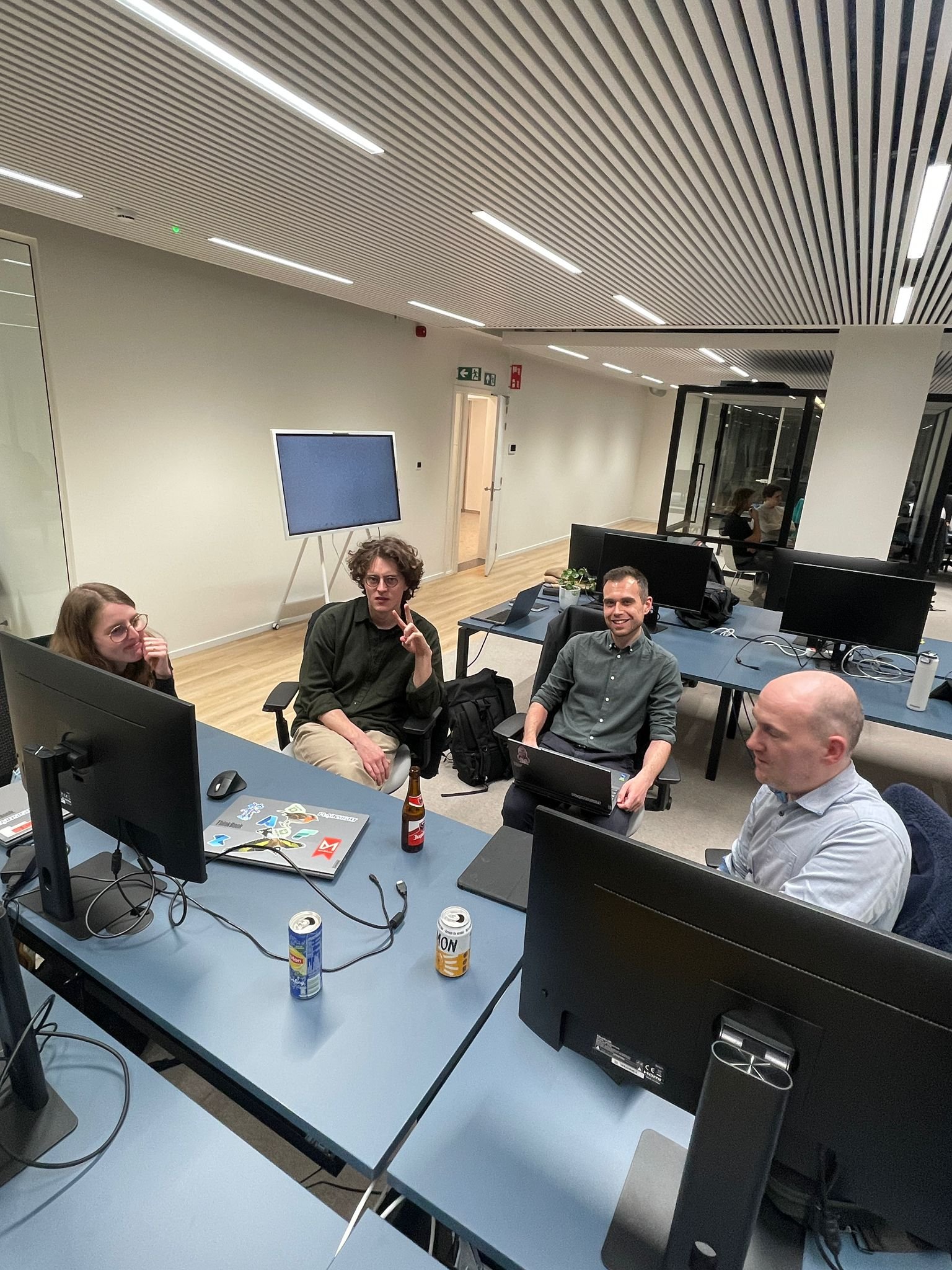
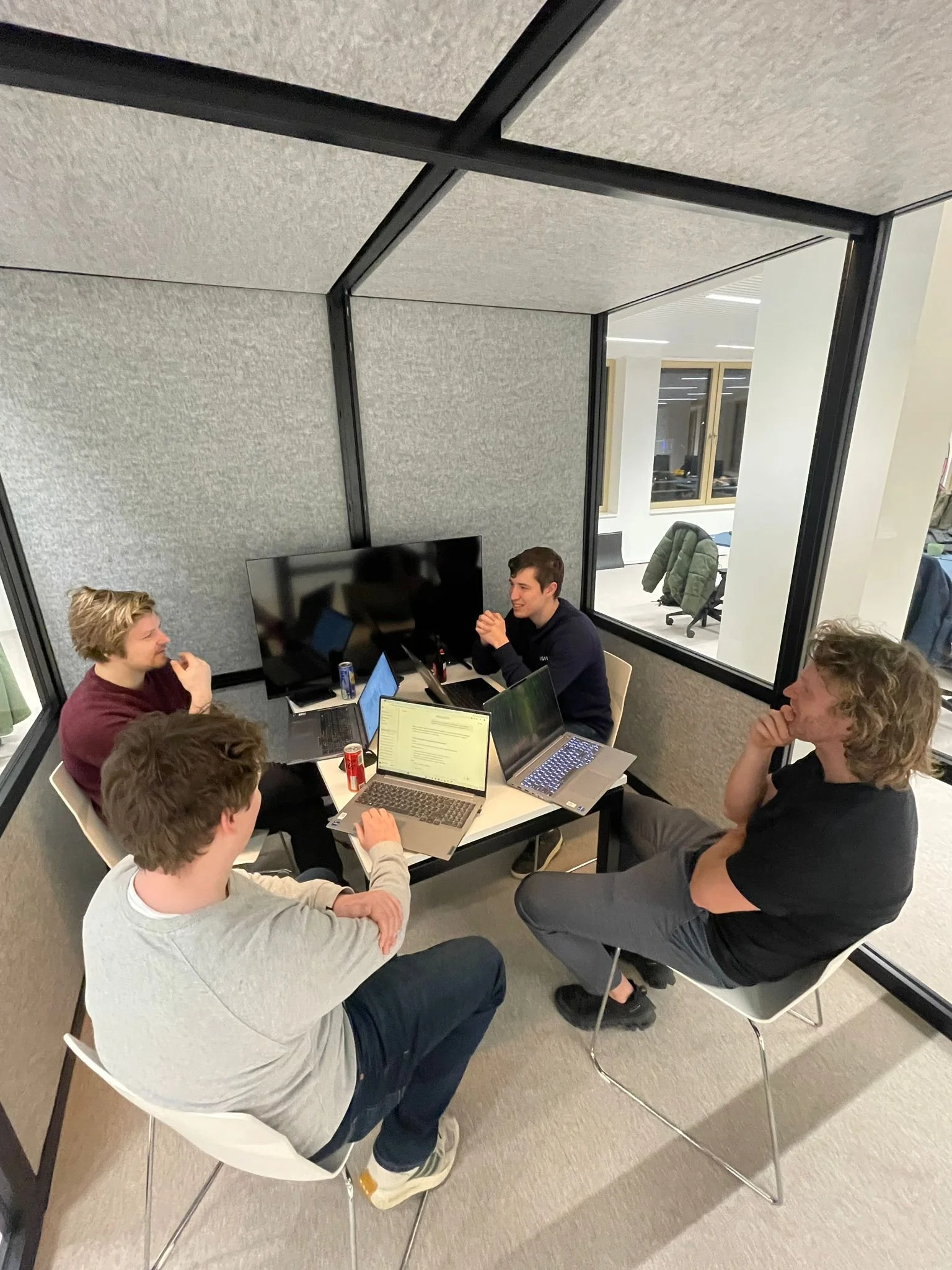
Another powerful example of an internal AI pilot is an AI-focused hackathon. Recently, a colleague organized a hackathon centered around agentic AI, where teams were challenged to build an application that simplified an internal business process. Think about anything related to recruitment, marketing, or internal operations.
In a time-boxed setting, teams explored how autonomous or semi-autonomous AI agents could take ownership of repetitive or time-consuming tasks, coordinate workflows, or support decision-making.
Because the focus was entirely internal, participants were free to experiment, test assumptions, and push boundaries without the pressure of immediate production readiness or customer exposure.
The outcome wasn’t just a working prototype. The hackathon revealed which processes were best suited for agentic AI, highlighted data and integration gaps, and sparked conversations about governance, trust, and human-in-the-loop design. Just as importantly, it helped teams build hands-on experience with emerging AI concepts, turning abstract ideas into tangible solutions.



Why start with internal AI-pilots
Launching internally first offers several strategic advantages:
Reduced Risk: Internal users are more forgiving than customers. Feedback loops are shorter, allowing faster iteration.
Faster Learning: Employees can identify gaps in data, design, or workflow integration that might be invisible during testing.
Proof of Value: An internal success story helps build buy-in across departments and leadership, paving the way for larger investments.
Cultural Adoption: Teams learn to trust and collaborate with AI tools, which is critical before scaling them to customer-facing environments.
how to run a successful internal ai-pilot
If you’re considering an internal pilot, keep these best practices in mind:
Start with a clear business question by defining what problem you’re solving. Example: “How can we reduce time spent on manual documentation searches?”.
Use real data because synthetic examples rarely reveal real-world challenges.
Engage your end users early. Involve the employees who will use the tool from the start.
Measure impact by tracking qualitative feedback (ease of use, adoption) and quantitative metrics (time saved, queries answered).
Iterate before scaling, the pilot is all about learning. Use insights to improve performance before rolling out to customers.
from pilot to full deployment
Internal AI pilots may not make headlines, but they quietly build the foundation for lasting success. They let companies experiment and learn in a low-risk environment, helping teams grow their AI capabilities faster and with greater confidence. The next time your company considers an AI project, think inward first. By starting small and starting inside, you unlock insights that make every external launch stronger, smarter, and more impactful.
Interested in exploring how AI can streamline your internal operations or improve customer experience? Book a consultation with our team at Plainsight to discuss how we can help you design, test, and scale your own AI solutions.